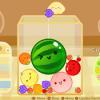
Have you ever found yourself completely absorbed by a simple puzzle game that seems impossible to put down? If not, you're about to discover your new obsession. The world of watermelon puzzles, particularly exemplified by the incredibly popular Suika Game, offers a delightfully engaging experience that combines strategy, physics, and just the right amount of chaos to keep you coming back for more.What Makes Watermelon Puzzles So Special?At first glance, a game about dropping fruit might seem overly simplistic, but don't let appearances fool you. These puzzle games tap into something fundamental about human psychology – our desire to organize, optimize, and achieve perfect combinations. The concept revolves around merging identical fruits to create larger ones, with the ultimate goal of creating a watermelon, the largest fruit in the hierarchy.The beauty of this genre lies in its accessibility. Anyone can understand the basic mechanics within seconds, yet mastering the game requires genuine skill, patience, and strategic thinking. It's this perfect balance between simplicity and depth that has made watermelon puzzles a global phenomenon, captivating players across all age groups and gaming backgrounds.Understanding the Core GameplayThe fundamental mechanics are refreshingly straightforward. You're presented with a container – typically a box or circular area – where you drop various fruits. Starting with the smallest fruits like grapes or cherries, your goal is to create matching pairs that merge into progressively larger fruits. Two grapes become a cherry, two cherries become a strawberry, and so on, following a predetermined fruit evolution chain.The physics engine plays a crucial role in the experience. Fruits don't simply disappear when they merge; they bounce, roll, and interact with each other in realistic ways. This creates a dynamic environment where each drop can trigger chain reactions, leading to multiple merges and dramatically higher scores. The unpredictable nature of these physics interactions adds an element of excitement and sometimes frustration that keeps the gameplay fresh.Space management becomes increasingly critical as you progress. The container has limited capacity, and once fruits reach the top boundary, the game ends. This constraint forces you to think carefully about placement, timing, and long-term strategy rather than simply dropping fruits randomly.The scoring system typically rewards both individual merges and chain reactions, with larger fruits providing exponentially higher points. This creates interesting strategic decisions: do you focus on creating one large fruit, or do you try to set up multiple simultaneous merges for maximum point accumulation?Mastering the Art of Strategic Fruit PlacementSuccess in Suika Game requires developing several key strategies. First and foremost, learn to think vertically and horizontally simultaneously. While your instinct might be to focus on immediate matches, experienced players constantly scan for opportunities to create cascading merges that clear significant space while generating massive point bonuses.Positioning is everything. Try to keep similar fruits grouped together rather than scattered across the container. This approach makes it easier to create merges and prevents the chaotic mixing that often leads to game-ending situations. Many players develop a personal system, such as keeping smaller fruits on one side and larger ones on the other, or creating designated areas for different fruit types.Patience often trumps speed. While there might be time pressure in some variations, rushing your drops frequently leads to poor positioning and missed opportunities. Take a moment to consider where your next fruit will land and what chain reactions it might trigger. Sometimes the best move is to wait for a better dropping opportunity rather than forcing a suboptimal placement.Pay attention to the physics. Understanding how fruits bounce and settle can help you make more precise drops. Larger fruits have more momentum and can push smaller ones around, which you can use strategically to reorganize your container layout. Sometimes dropping a fruit slightly off-center can create the perfect bounce to trigger a desired merge.Don't underestimate the power of the container walls. Using walls to guide fruit placement and create specific arrangements is a hallmark of advanced play. Skilled players often use wall bounces to position fruits more precisely than would be possible with straight drops alone.

Educar. Potenciar. Actuar. La misión de la Fundación Project WET es llevar la educación relativa al agua a los niños, padres, educadores y comunidades de todo el mundo.
